
Family-owned · Jacksonville Local
Hardwood Refinishing That Restores Without Replacing
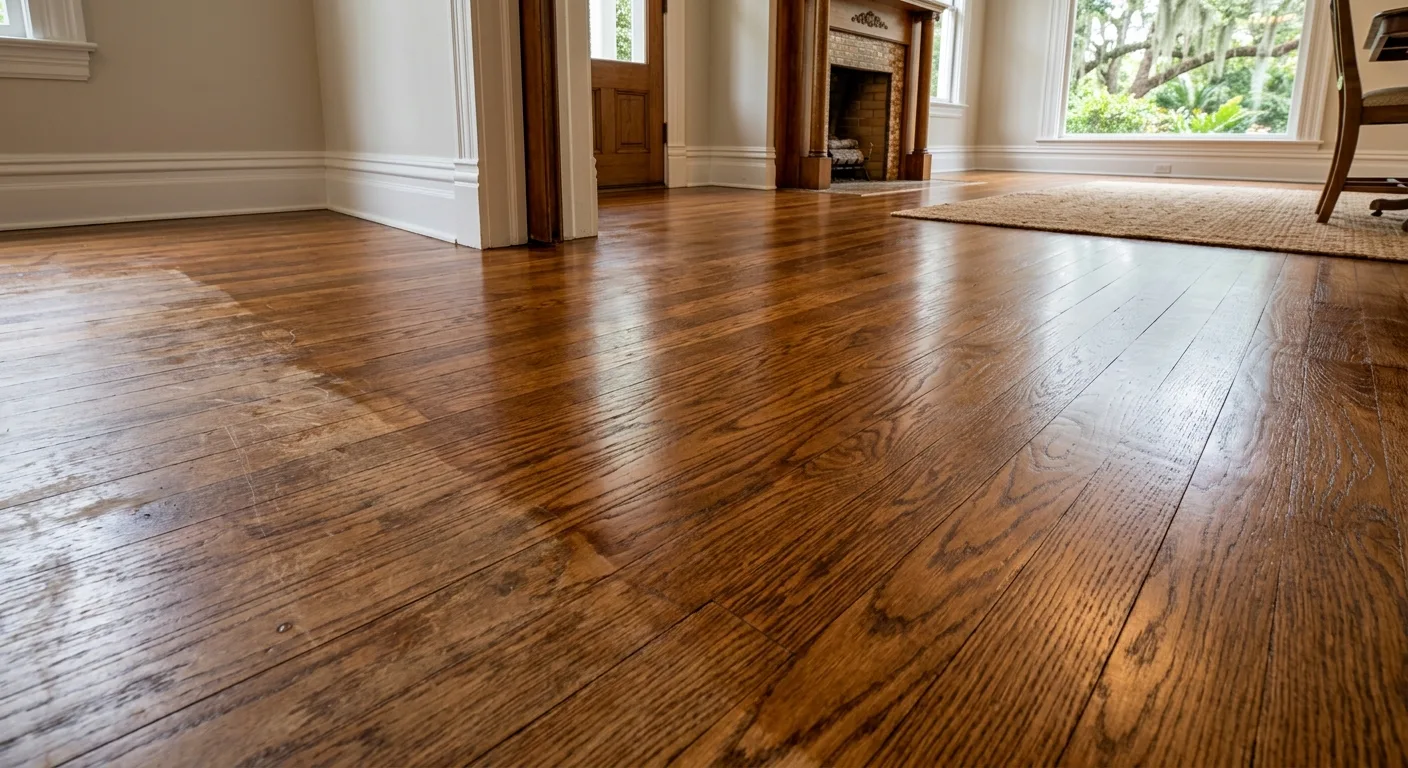
Worn, scratched, or dull hardwood floors can look new again without the cost of full replacement.
Free estimate
Tell us what you need
Three fields. It reaches a person here, not a call centre.
Hardwood Refinishing Services Worth the Investment
Refinishing hardwood floors is almost always cheaper than replacing them, and the results can be just as dramatic. If your floors are scratched, stained, or have lost their finish, sanding and refinishing restores the wood itself rather than covering it up. Strictly Builders Inc handles the full process: surface prep, sanding, stain selection, and finish coats applied correctly so they cure flat and hold. If you're not sure whether your floors can be refinished or need to be replaced, call us and we'll give you a straight answer before any work starts.
The condition of the wood determines what's possible. Floors that have been refinished multiple times may not have enough material left to sand again. Boards with deep gouges, cupping from moisture, or subfloor problems need to be assessed first. For floors that qualify, the process involves sanding down to bare wood, addressing any board-level repairs, applying your chosen stain, and sealing with a durable topcoat. Cost varies based on square footage, current finish condition, number of stain coats, and whether any boards need individual attention before sanding begins. Every job is different -- contact Strictly Builders Inc for an accurate estimate.
What Hardwood Refinishing Actually Covers
Not every floor problem needs a full refinish. Here is what we address and when.
Surface Sanding
We sand the floor down to bare wood using drum and edge sanders, removing the old finish, stains, and surface scratches entirely. This is what makes refinishing permanent rather than cosmetic.
Board-Level Repairs
Loose boards, minor squeaks, and isolated damage get addressed before sanding starts. We won't refinish over a floor that has structural issues underneath -- that's a job we flag, not skip.
Stain Application
If you want to change the color of your floors, stain goes on after sanding. We carry a full range from natural clear to deep walnut tones. You see a sample before we commit the whole floor.
Finish Coats and Sealing
We apply multiple coats of finish -- typically polyurethane -- with proper dry time between each coat. Rushing this stage is where most DIY and budget jobs fail. We don't cut it short.
Subfloor Assessment
If the floor is cupping, bouncing, or has soft spots, we check the subfloor before we proceed. Sometimes the issue isn't the hardwood at all. We'd rather tell you that upfront than refinish over a problem.
Post-Refinish Cleanup
Sanding generates a significant amount of fine dust even with vacuum-equipped equipment. We clean up thoroughly before the finish goes down and again when the job is complete.
The Process
How a Refinish Job Gets Done Right
- 01
Assessment and Prep
We look at the wood thickness, check for past refinishes, assess any damage, and confirm the subfloor is sound. If the floor qualifies, we move forward with a clear scope.
- 02
Sanding and Staining
Drum sanding removes the old finish down to raw wood. Edge sanders hit the perimeter. Stain gets applied at this stage if you're changing the color. Everything dries fully before the next step.
- 03
Finish Coats and Cure Time
We apply finish in multiple coats, sanding lightly between each one. The final coat needs adequate cure time before furniture goes back. We give you a clear timeline before we start.
Worth Knowing
Refinish or Replace: How to Read Your Floor
Why Refinishing Gets Cut Short by Other Contractors
The three places where a refinish job most commonly fails -- and what we do differently.
- 01
Insufficient Sanding
If the old finish isn't fully removed, the new coats won't bond properly and will peel within a year. We confirm bare wood before stain or finish goes on. No shortcuts at this stage.
- 02
Rushing Dry Time
Applying the next coat before the previous one is fully dry traps solvents in the finish and causes clouding or soft spots. We don't schedule the next coat until the current one is ready.
- 03
Skipping Board Repairs
A beautiful finish over a squeaky, bouncing floor is still a problem floor. We address loose boards and minor structural issues before the refinish starts, not after a complaint.
Areas We Cover for Hardwood Refinishing
We refinish hardwood floors across the region, including older homes in Riverside and Avondale where original hardwood is a major part of the home's value, and newer construction in growing corridors like St. Johns and Ponte Vedra. We also work throughout Orange Park and Fleming Island. If your neighborhood isn't listed, call -- we cover a wide service area and can confirm availability quickly.
- Riverside
- Avondale
- San Marco
- Mandarin
- Southside
- Arlington
- Murray Hill
- Atlantic Beach
- Neptune Beach
- Ponte Vedra
- Fleming Island
- Orange Park
- St. Johns
- Nocatee
- Baymeadows
Schedule Your Hardwood Refinishing Estimate
Floors that look worn don't have to be replaced. Call Strictly Builders Inc, get a straight assessment, and find out what refinishing can actually do for your space.