
Hours vary Jacksonville (904) 699-2626
Strictly Builders Inc
Custom Staining That Works With the Wood

Family-owned · Jacksonville Local

Custom Staining That Works With the Wood

From raw hardwood to aged surfaces, we match tone, grain, and finish to what the space actually needs.

Free estimate

Tell us what you need

Three fields. It reaches a person here, not a call centre.

No obligation · Responds within 1 business day


By submitting this form you agree that we may contact you about your request and share your details with partner companies for marketing purposes.

What Custom Staining Actually Changes

Custom staining isn't about picking a color from a chip card. It's about reading the wood grain, understanding how a species absorbs pigment differently across its surface, and building a finish that holds. That's the part most people don't think about until a contractor has already brushed on something too dark or too flat and it's dried. At Strictly Builders Inc, Ryan Alson has been doing this work for three years across a range of residential projects, and the process starts with the wood itself, not the palette. If you want staining done to spec and not just done fast, call for a free estimate.

The cost of a custom staining job depends on surface area, the condition of the existing wood, how much prep work is required before a single drop of stain touches the surface, and the finish level you're after. A floor that needs sanding and grain-opening before stain hits it is a different scope than new trim being stained to match existing millwork. Saturation, topcoat layers, and drying time between coats all factor in. We don't compress those steps. A staining job that skips proper prep will lift, streak, or fade within a season, and then you're starting over. Every job is different, contact Strictly Builders Inc for an accurate estimate.

The Process

Prep Work Decides the Outcome

The stain is the last step, not the first decision.
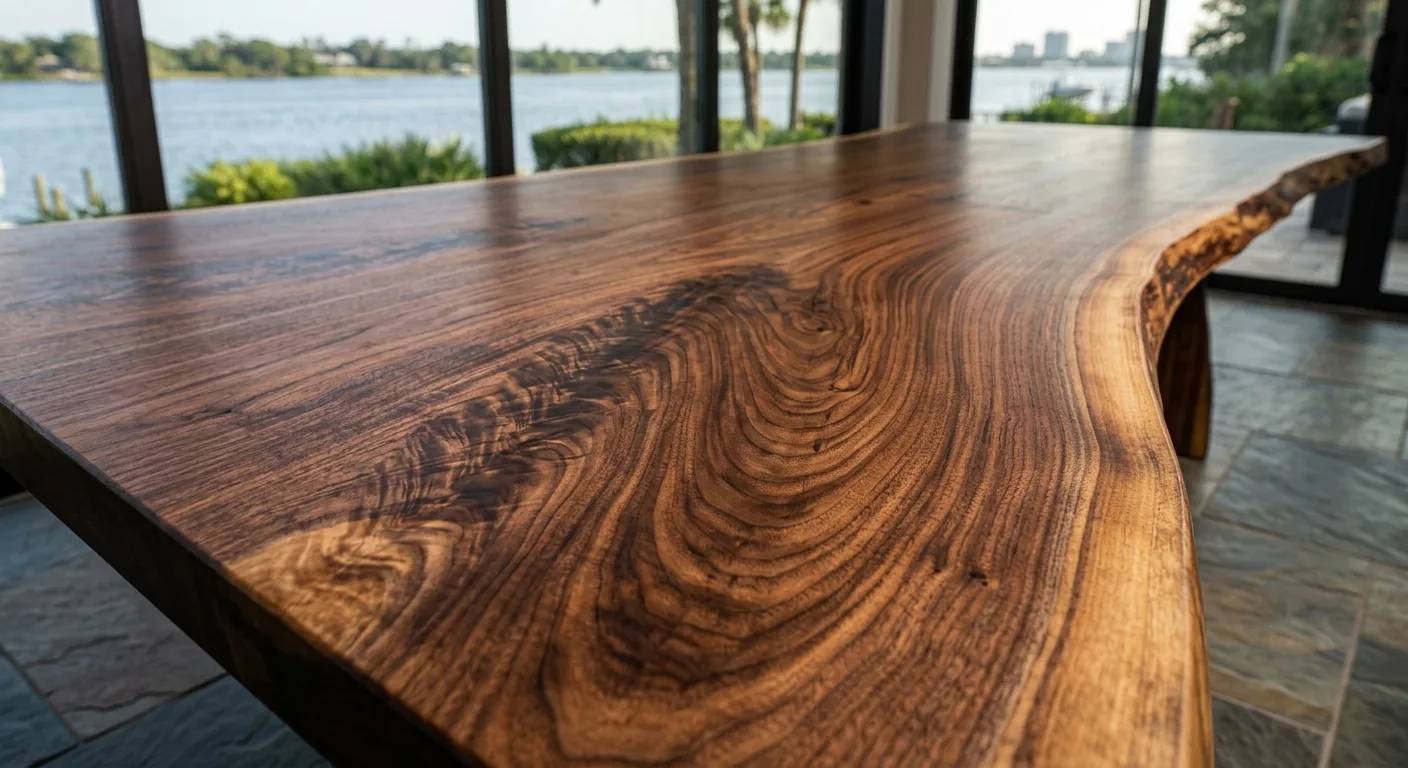
Surface preparation is where custom staining projects succeed or fail. Wood that hasn't been sanded to the right grit won't accept stain evenly. End grain pulls color faster than face grain, and if you don't account for that upfront, you end up with blotchy, uneven saturation that no second coat will fix. We sand in sequence, raise the grain with water before the first pass of stain, and let each coat absorb fully before any topcoat goes down. On hardwood refinishing projects, this prep phase is often the majority of the work hours. That's how it should be.
cabinetry work, professional service in Jacksonville, FL

Where We Apply Custom Staining

Staining isn't limited to floors. Grain, tone, and finish matter across every wood surface.

01

Hardwood Floors

Full-floor staining after sanding, with species-specific application techniques. Oak, pine, and exotic hardwoods each absorb pigment differently. We adjust accordingly.

02

Stairs and Treads

Stairs take daily abuse and need a finish system that holds under foot traffic. We work through our stair installation and refinishing process, matching tread tone to the surrounding floor or setting a contrasting accent deliberately.

03

Trim and Millwork

Baseboards, casings, and custom trim work that need to match an existing stain profile or take a new one. Brushwork on trim requires clean lines and controlled application, especially at transitions.

04

Cabinetry

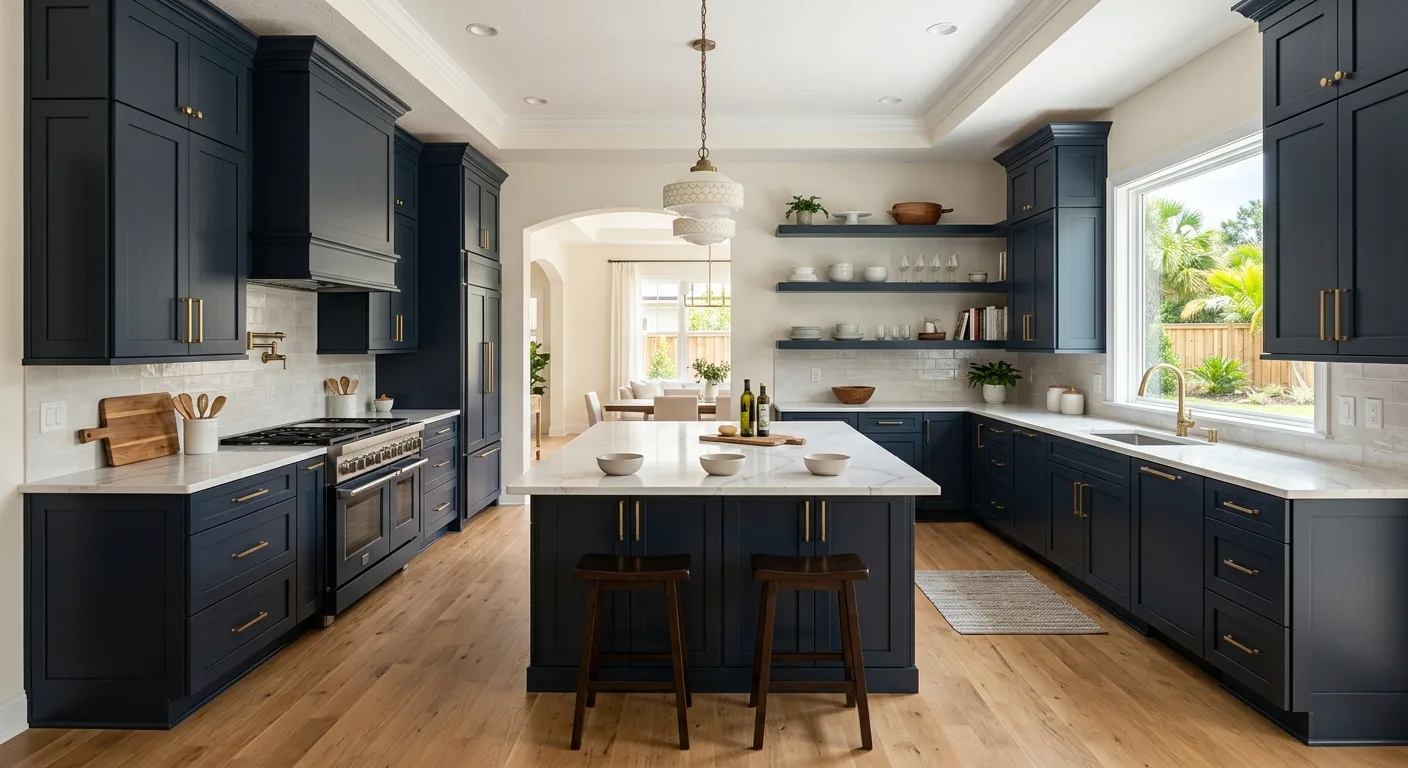
Staining cabinet boxes and doors to refresh the look without full replacement. Works well alongside a cabinet installation project or as a standalone finish update.

05

Custom Borders and Inlays

Staining custom borders and inlays in contrasting tones requires masking precision and full understanding of how different species absorb the same stain at different rates.

How We Work

From First Coat to Final Topcoat

  1. 01

    Surface Assessment and Sanding

    We evaluate the wood species, existing finish condition, and grain direction before any sanding starts. Grit sequence matters. We don't skip to the finish grit.

  2. 02

    Stain Application and Absorption

    Color is applied in controlled coats, with each pass allowed to fully penetrate before we evaluate tone. Blotch-prone species like pine get a pre-conditioner first.

  3. 03

    Topcoat and Cure

    A stain without a proper topcoat won't last. We apply oil-based or water-based polyurethane or hard wax oil depending on the surface use, foot traffic, and finish preference, then allow full cure time before the space is used.

What Sets a Good Stain Job Apart

Honestly, most DIY staining problems come from one of two places: skipping grain-raising before the first coat, or wiping off excess stain too fast. Both result in uneven saturation that gets worse under a topcoat, not better. A professional custom staining job should look consistent from every angle, with no lap marks at the edges of boards and no blotchy end grain standing out from the field. If you're looking at a finished floor and the end grain at doorways is three shades darker than the face of the board, the prep was wrong. We don't let that pass. On projects that also involve tile flooring installation in adjacent rooms, matching the visual warmth of a stained wood floor to the grout and tile tone is something we plan for from the start, not after everything is set.
cabinetry work, professional service in Jacksonville, FL

What This Service Doesn't Cover

We don't stain concrete, pressure-treated exterior decking, or surfaces that require an opaque paint finish rather than a translucent stain. If you're looking at exterior deck staining or an opaque painted finish over wood, those are separate scopes. For kitchens where the goal is color rather than wood tone, our kitchen painting service is the right fit. We won't talk you into staining a surface that's going to fight the process, and we won't apply a finish system that can't hold up to the conditions the surface will actually face.
cabinetry work, professional service in Jacksonville, FL

Frequently Asked Questions About Custom Staining

How do I know which stain color will look right on my specific wood species?
Species determines absorption rate before color even enters the equation. Red oak is porous and takes dark stains evenly. Maple is dense and resists penetration, making it prone to blotching with oil-based stains. Pine has alternating hard and soft grain rings that grab pigment at different rates. We test on a sample area before committing to the full surface, and we account for how the topcoat will shift the tone slightly darker once it's applied.
Can existing hardwood floors be restained to a darker tone without replacing the boards?
Going darker is the more forgiving direction. We sand down to bare wood, which removes the existing stain and finish entirely, then apply the new color. Going lighter is harder because you can't fully remove the pigment that has already penetrated the grain. Whether the floor is a good candidate depends on how much thickness remains in the boards and the condition of the subfloor underneath. We assess that before giving you an answer.
How long does a stained floor need to dry before furniture goes back in?
Light foot traffic is typically safe after 24 hours with water-based finishes. Oil-based polyurethane topcoats need 48 to 72 hours before furniture placement, and full cure, where the finish reaches its maximum hardness, takes around 30 days. We tell our clients to avoid area rugs for the first two weeks because they trap moisture and can leave permanent marks in an under-cured finish. Most people don't hear that from the contractor until it's already happened.
What causes stain to look blotchy or streaky after it dries?
Blotching is almost always a prep issue, not a product issue. Wood that wasn't sanded uniformly will show lap marks. Blotch-prone species like pine, cherry, and birch need a pre-conditioner applied before stain or they absorb unevenly along the grain. Excess stain that wasn't wiped off in time can also pool in low spots and dry darker. None of those are fixable after the topcoat is down without sanding back to bare wood.
Is oil-based or water-based stain better for interior hardwood floors?
Neither is universally better. Oil-based penetrates deeper and enhances grain contrast more dramatically, which is why it's still the standard for floors where you want a rich, warm tone. Water-based dries faster, has lower odor, and maintains the wood's natural color more closely rather than adding amber warmth. For high-traffic floors, a water-based stain under a commercial-grade water-based polyurethane is a fully legitimate system. The right answer depends on your timeline, ventilation, and the look you're after.

Ready to Talk Through Your Staining Project?

Three years in the trade. One contractor through the whole project.

Related