
Family-owned · Jacksonville Local
Tile Work That Holds Its Line for Years
From substrate prep to final grout seal, every tile set by Strictly Builders Inc is laid to last.
Free estimate
Tell us what you need
Three fields. It reaches a person here, not a call centre.
Florida's Tile Contractor Standard, Done Differently
Tile work isn't just a finish material. It's a structural commitment. The reason most tile jobs fail within a few years isn't the tile itself. It's what happened underneath it before the first piece went down. At Strictly Builders Inc, Ryan Alson approaches every tile installation the way a builder approaches a foundation: substrate first, layout second, aesthetics third. That order matters. Whether you're looking at a kitchen backsplash, a full bathroom tile remodel, or large-format floor tile through an entryway, our process starts with an assessment of what's under the surface before a single tile is set. Call us before you start shopping for tile.
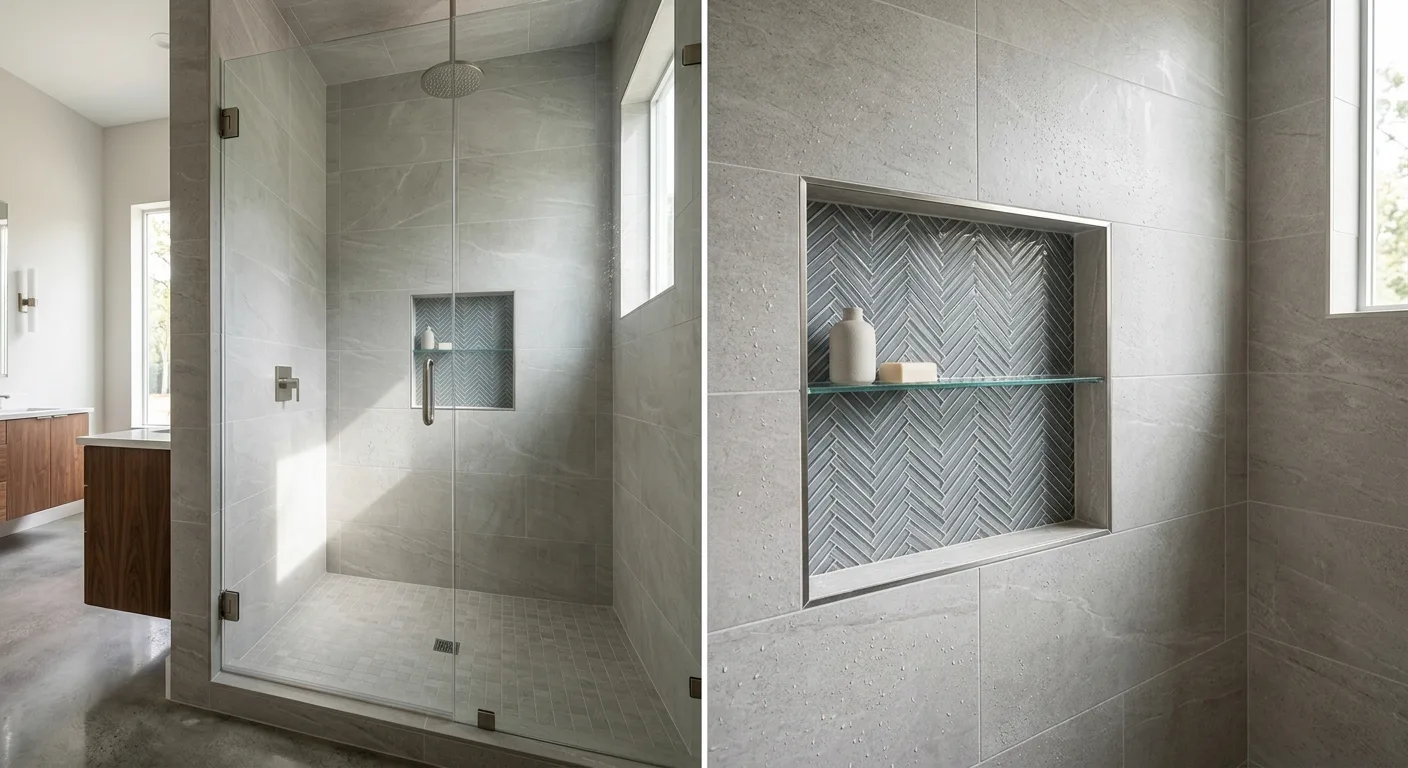
The scope of tile work determines cost more than any other single factor. A simple ceramic floor in a 60-square-foot bathroom is a different job than a custom fireplace tile installation using natural stone with intricate cuts. Material choice plays a role: porcelain runs denser and harder than ceramic, requires different thin-set mortar formulations, and demands slower, more precise cutting. Natural stone adds sealing requirements on top of that. Substrate condition matters too. If the subfloor has flex or moisture issues, those have to be corrected before tile goes down or the grout will crack within a season. Shower niches, heated floor systems, waterproofing membranes, and decorative inlays all add scope. Every job is different. Contact Strictly Builders Inc for an accurate estimate.
What Sets the Work Apart
Substrate Assessment First
We check for levelness, flex, and moisture before the first tile is ordered. A substrate that moves or holds water will crack your grout and loosen your tile within a year. We address the base layer as a structural step, not an afterthought.
Correct Mortar for Each Material
Porcelain, ceramic, and natural stone each require different thin-set formulations and coverage percentages. Using the wrong mortar is one of the most common reasons tiles pop loose. We match the mortar to the material and the substrate every time.
Precision Layout and Symmetrical Cuts
Before a single tile is set, we plan the layout across the full surface. That means symmetrical cuts at borders, consistent grout spacing, and no sliver cuts hiding in visible corners. The layout stage takes time. It's worth it when the finished surface reads as intentional.
Waterproofing Where It Counts
Showers and wet-area floors require a waterproofing membrane behind the tile, not just water-resistant backer board. We apply the correct membrane system for the application, which is the difference between a shower that lasts and one that damages the wall cavity behind it.
Grout Selection and Sealing
Grout color and joint width are aesthetic decisions, but grout type is a technical one. Epoxy grout performs differently than sanded or unsanded cement grout, and every finished tile surface needs to be properly sealed. We advise on the right grout system and seal it before we leave.
Full Scope Under One Contractor
We don't just set tile. When tile work connects to subfloor repair, demolition of existing surfaces, or paint finishing around newly tiled walls, we handle those under the same project. No hand-off between separate trades. One call, one crew, one finished space.
Materials We Work With
Porcelain, Ceramic, Stone, and Everything Between
Material selection changes how the job gets executed, not just how it looks.
- 01
Porcelain Tile
Dense, low-porosity, and highly durable. Porcelain is the right call for high-traffic floors and any surface with regular moisture exposure. Cutting it cleanly requires diamond blades and patience. We don't rush the cuts.
- 02
Ceramic Tile
More workable than porcelain and well-suited for walls, backsplashes, and lower-traffic floors. The range of sizes, finishes, and price points makes ceramic the most versatile option on most residential jobs.
- 03
Natural Stone
Marble, travertine, and slate require sealing before installation and again after grouting. Each slab reads differently, so layout planning is even more important when the material itself has variation. We've set marble tile on kitchen backsplashes and client reviews confirm the result holds up.
- 04
Large-Format Tile
Tiles over 15x15 inches require a flatter substrate and back-buttering technique to achieve full mortar coverage. The substrate work here isn't optional. Without it, large-format tiles hollow-sound and crack at the corners under foot traffic.
How a Tile Project Runs
- 01
Step 1: Surface and Substrate Review
We inspect the existing substrate for level, flex, moisture, and compatibility with the planned tile. Any subfloor or backer issues get resolved before tile is ordered or installation begins.
- 02
Step 2: Layout, Cut Planning, and Setting
We dry-lay the field to confirm the layout before mixing mortar. Cuts are marked, tile is set in sequence with consistent spacing, and every piece is checked for full coverage beneath it.
- 03
Step 3: Grouting, Sealing, and Final Review
Grout is applied after the mortar cures, joints are finished clean, and the surface is sealed. We do a final walkthrough before calling the job complete. If anything reads wrong on close inspection, it gets addressed before we leave the site.
Straight from Google
What Clients Say About the Work
Ryan did a great job for us! Marble tile, kitchen backsplash and kitchen painting all look great. Delivered high quality work on time and on budget. I would highly recommend giving him a call.
 Lisa BlowOct 2025 · Google
Super thorough and very friendly owner. does a fantastic job!
 Kendall BlowNov 2024 · Google
Common Questions
Tile Work Questions, Answered Directly
Can a handyman do tile work, or does it need a contractor?
How does substrate condition affect tile longevity?
What's the difference between sanded and unsanded grout, and when does it matter?
How long does tile work need to cure before it can be used?
What causes grout to crack shortly after installation?
Do you handle tile replacement as well as new installation?
What tile materials do you work with?
Areas We Serve for Tile Work
Strictly Builders Inc completes tile installation and replacement projects across North Florida and the surrounding coastal communities. If your project falls outside these areas, call and we'll let you know directly.
Get Your Tile Work Estimated
Strictly Builders Inc. Available Monday through Friday around the clock, Saturday 6AM to 6PM, and Sunday.