
Family-owned · Jacksonville Local
Luxury Vinyl Tile Installation That Holds Up
LVT flooring installed over properly prepped subfloors for a finish that doesn't buckle, gap, or lift.
Free estimate
Tell us what you need
Three fields. It reaches a person here, not a call centre.
LVT Installation Starting With the Subfloor
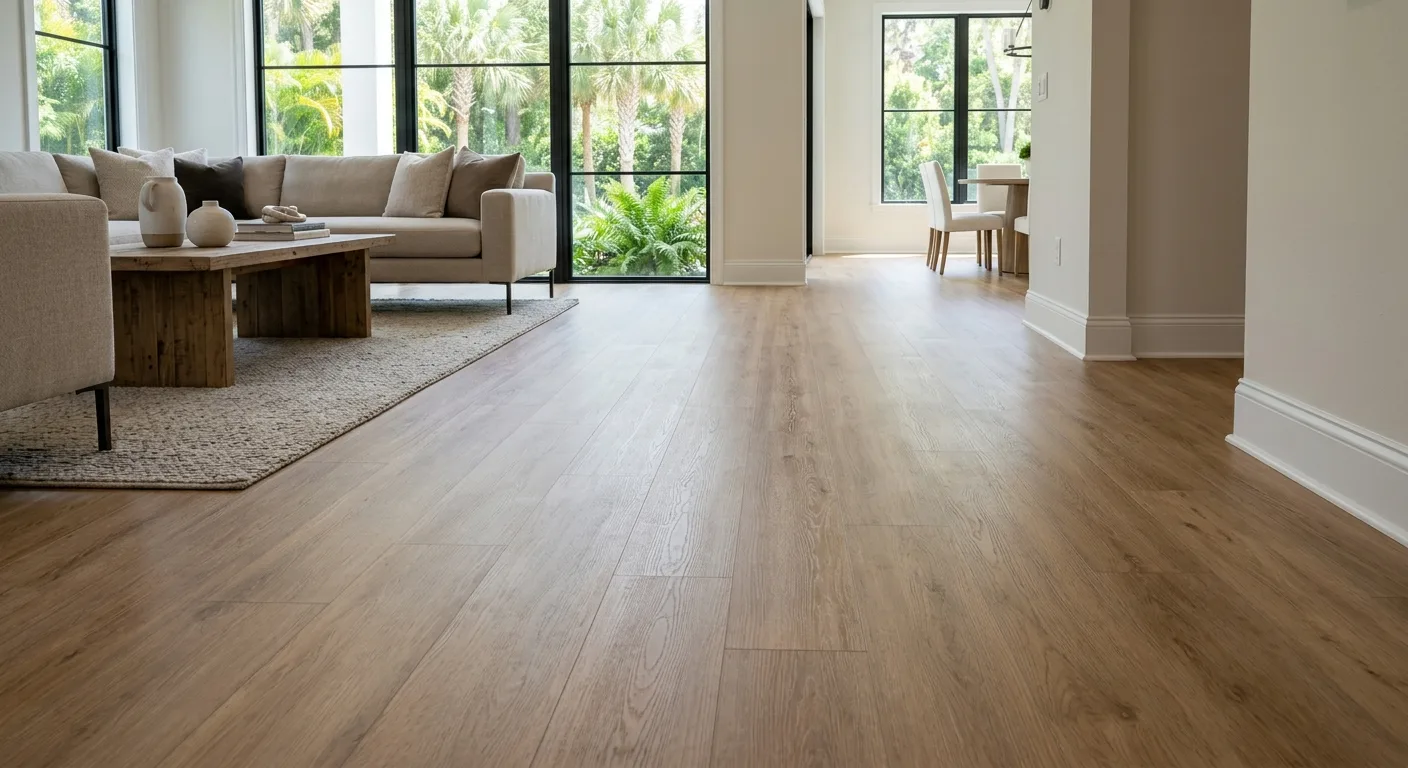
Luxury vinyl tile installation is only as good as what's underneath it. Most LVT failures, lifting edges, hollow spots, visible seams, trace back to a subfloor that wasn't level, wasn't dry, or wasn't properly cleaned before the first tile went down. At Strictly Builders Inc, Ryan Alson handles every phase of the installation himself, which means subfloor inspection and correction happen before a single tile is ever laid. If you want LVT that looks sharp and stays that way, call for a free estimate and let's look at the actual condition of your floor first.
LVT is one of the most versatile flooring installations available for residential and light commercial spaces. It performs in high-moisture rooms where hardwood can't go, it handles foot traffic that wears through carpet in two years, and it comes in plank and tile formats that convincingly replicate stone and wood at a fraction of the material cost. What drives cost up or down on an LVT job is the size of the space, how much subfloor correction is needed, the thickness and wear-layer rating of the tile selected, and whether transitions and trim work are part of the scope. Every job is different, contact Strictly Builders Inc for an accurate estimate.
What Goes Wrong With Cheap LVT Installs
The substrate prep phase is where most installations are won or lost.
Installation Process
How We Install LVT From First Cut to Final Trim
- 01
Subfloor Assessment and Correction
We inspect the subfloor for moisture, flatness, and structural integrity. Any high spots are ground down, low spots are filled with leveling compound, and loose subfloor panels are secured. This phase determines the quality of everything that follows.
- 02
Layout, Acclimation, and Tile Placement
LVT needs to acclimate to room temperature before installation. We plan the layout to avoid narrow cuts at doorways and walls, then work row by row, keeping joints staggered and locking seams tight throughout.
- 03
Transitions, Trim, and Final Inspection
We fit all threshold transitions, quarter-round or base shoe molding, and any door undercutting needed for clearance. The finished floor gets a full walk-through inspection before we consider the job complete.
Key Facts
What Makes LVT Work in Florida Homes
Moisture Resistance
LVT is 100% waterproof through the core, which matters in Florida, where humidity alone can cause dimensional movement in less stable flooring materials. It's a sound choice for tile shower installation areas and adjacent bathrooms.
Wear Layer Thickness
Residential LVT typically runs 6 mil to 20 mil wear layers. Thicker wear layers resist scratching from pets and furniture longer. We specify the right wear layer for the traffic level in each room. Not just whatever the supplier has in stock.
Glue-Down vs. Floating
Floating LVT clicks together and expands and contracts as a unit. Glue-down LVT bonds to the subfloor directly and stays put in high-traffic commercial applications. The choice depends on your subfloor type, room size, and what's going on top. Honestly, most residential jobs do fine floating.
Subfloor Compatibility
LVT can go over concrete, plywood, and existing hard flooring in good condition, but not over soft or springy subfloors, carpet, or surfaces with too much height variation. We won't lay tile over a subfloor we wouldn't stake our name on.
Temperature Stability
Floating LVT requires an expansion gap at every wall and fixed object. In Florida's climate, where interior temperatures can swing significantly without AC, that gap isn't optional. It's what keeps the floor from buckling mid-room.
Grouted Tile Look
LVT in tile format can be installed with narrow grout-joint spacers for a look nearly identical to ceramic or porcelain. For homeowners who want the stone aesthetic in a kitchen without the cold hardness underfoot, this is a legitimate alternative worth knowing about.
LVT or Ceramic Tile: Choosing the Right Floor
Common LVT Installation Questions
Does LVT flooring have to be glued down?
What do you put under luxury vinyl tile?
What should LVT be laid on for best results?
What are the most common mistakes made during LVT installation?
Can LVT be installed over existing flooring?
How long does LVT installation take for a typical room?
LVT Installed Across Northeast Florida
Strictly Builders Inc installs luxury vinyl tile in homes and light commercial spaces throughout the region. Ryan Alson handles projects from beach community cottages in Neptune Beach and Jacksonville Beach to newer construction corridors in Saint Johns and Ponte Vedra Beach. Older homes with original subfloors in Green Cove Springs and Fernandina Beach often need more subfloor correction before LVT goes down, and that's exactly the kind of work we assess and account for upfront.
Schedule Your LVT Installation Assessment
LVT installed over a properly prepped subfloor will hold its look for years. Installed over a problem subfloor, it'll show you exactly what was skipped.