
Hours vary Jacksonville (904) 699-2626
Strictly Builders Inc
Stair Installation and Refinishing: Structural, Lasting Precision

Family-owned · Jacksonville Local

Stair Installation and Refinishing: Structural, Lasting Precision

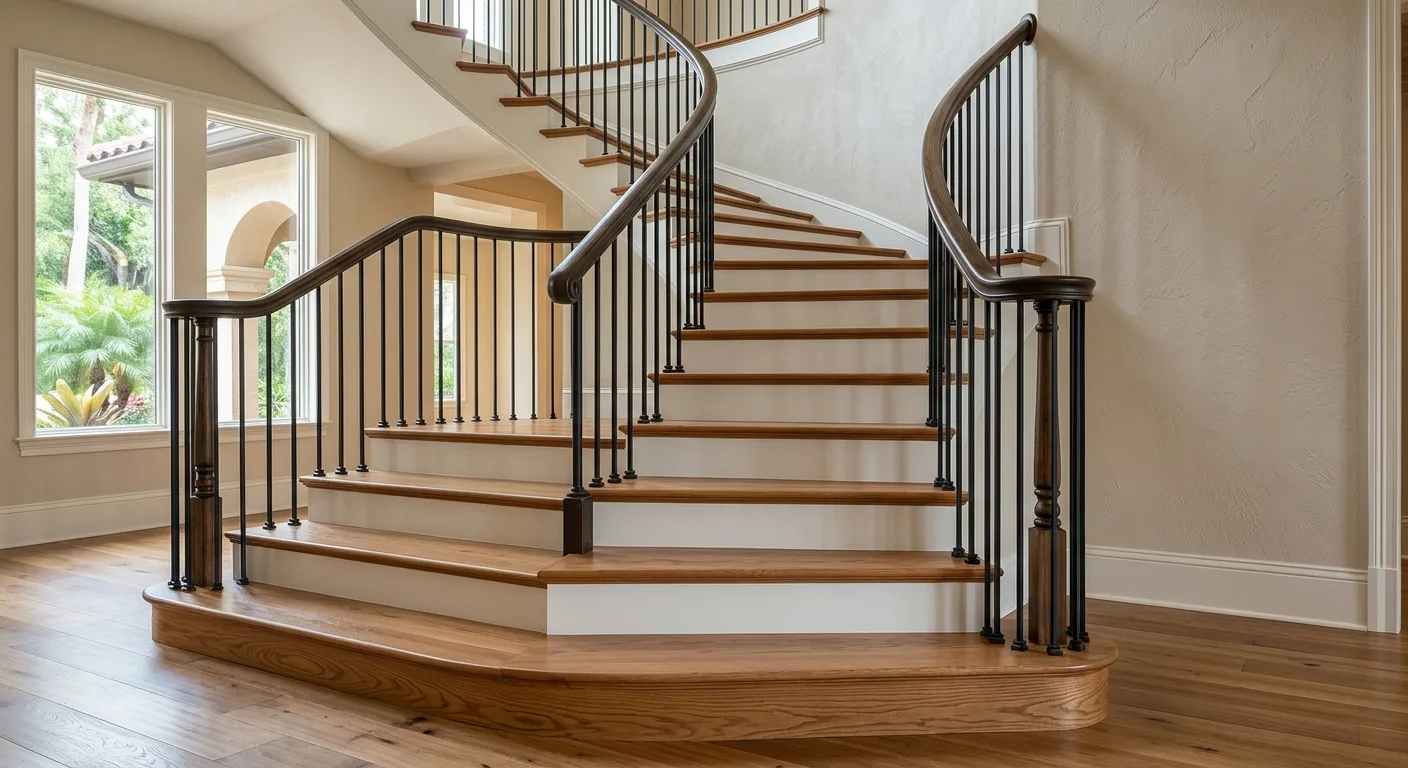
From full staircase builds to worn-surface refinishing, we handle every step with exacting standards.

Free estimate

Tell us what you need

Three fields. It reaches a person here, not a call centre.

No obligation · Responds within 1 business day


By submitting this form you agree that we may contact you about your request and share your details with partner companies for marketing purposes.

Stair Installation and Refinishing, Handled Right

Stair installation and refinishing is one of those projects where the margin for error is genuinely zero. A staircase carries more daily load than almost any other structural element in a home, and refinishing worn treads without addressing the underlying structure first is how cosmetic work becomes a callback six months later. At Strictly Builders Inc, we evaluate the stringers, carriages, and subfloor support before a single board is sanded or a single tread is set. Ryan Alson has built and refinished staircases across the area for three years under one contractor, one license, one accountable crew. If your stairs creak, feel soft underfoot, or look like they belong in a different decade, call for a free estimate before the problem compounds.

The scope of stair work varies considerably. A full installation on a new build or room addition requires precise stringer layout, proper riser height for code compliance, and material selection that matches the home's load and aesthetic demands. Refinishing an existing hardwood staircase involves multi-stage sanding, dust containment, and the selection of a finish durable enough to handle the concentrated foot traffic that wears a stair tread far faster than open floor. Cost is driven by the number of steps, the condition of the existing structure, the wood species, the finish system selected, and whether handrail or baluster work is part of the scope. Every job is different -- contact Strictly Builders Inc for an accurate estimate.

What We Cover on Every Stair Project

  1. 01

    Structural Assessment First

    Before any cosmetic work begins, we inspect the stringers, carriages, and subfloor connections. A staircase that flexes or squeaks has a structural problem, not a surface problem. We address the source.

  2. 02

    Code-Compliant Installation

    New stair builds are laid out to Florida building code requirements for riser height, tread depth, and handrail continuity. We don't approximate these dimensions; they govern safety, and we treat them accordingly.

  3. 03

    Multi-Stage Refinishing

    Worn hardwood treads go through a sequenced sanding process that removes old finish and surface damage without over-cutting the wood. We contain dust at the source and apply industrial-grade finishes built for high-traffic use.

  4. 04

    Handrail and Baluster Work

    Loose or damaged railings are a liability, not just an eyesore. We repair, replace, or install handrail and baluster systems as part of the same project scope, so the finished staircase is structurally sound from top to bottom.

Our Process

How a Stair Project Moves from Call to Completion

  1. 01

    Inspection and Scope

    We walk the staircase, probe for flex and squeak, check riser and tread dimensions, and assess the finish or material condition. This tells us whether you need cosmetic refinishing, partial structural repair, or a full new build.

  2. 02

    Material Selection and Prep

    For installations, we confirm wood species, tread profile, and riser style. For refinishing, we determine the existing finish system and select the sanding sequence and topcoat appropriate to traffic level and wood species.

  3. 03

    Execution and Final Inspection

    We complete the work in a defined sequence to minimize disruption to the home. Before we leave, every tread is tested for sound, every riser is flush, and the finish is inspected under raking light for uniformity.

Material Options

Wood Species and Finish Systems We Work With

Material selection drives both the longevity and the visual character of a staircase. These are the options we install and finish most often.

01

Red and White Oak

Oak is the most common hardwood stair material in Florida homes. It takes stain well, holds up under foot traffic, and is widely available in tread and riser profiles. White oak runs slightly tighter grain and holds finish longer under heavy use.

02

Hickory and Maple

Both species are significantly harder than oak on the Janka scale, which matters on a staircase that sees daily concentrated impact. Hickory's natural variation gives it a distinctive look; maple finishes smooth and consistent.

03

LVP Stair Nose and Treads

For homes where the adjoining floors are luxury vinyl plank, we install matching stair nose profiles and LVP-compatible tread systems. The result is a continuous visual flow from landing to floor without the acoustic problems of glued-down overlays.

04

Oil-Modified vs. Water-Based Finish

Oil-modified polyurethane cures harder and is more forgiving on high-traffic stairs; water-based systems dry faster and carry less VOC. We'll tell you which one fits the job rather than defaulting to whichever is easier to apply.

When Refinishing Makes Sense and When It Doesn't

Honestly, not every staircase needs a full refinish. If the existing wood has more than a quarter inch of thickness above the groove line and the structure underneath is sound, refinishing recovers the surface at a fraction of replacement cost. We can determine sanding viability on-site by checking the tread thickness and examining the finish layers. Where treads are cupped, cracked through, or structurally compromised, we recommend replacement rather than a finish coat over a failing surface. We won't upsell you into a full installation when a targeted refinish solves the problem -- but we also won't refinish a tread that's going to fail again in two seasons. For homes undergoing broader renovation, stair work integrates naturally with adjacent hardwood refinishing and flooring demolition and removal if the project scope warrants it.
  • Tread thickness above the groove line is sufficient for sanding
  • Existing finish is worn but substructure is solid
  • Treads are cupped, cracked, or thin -- replacement is the call
  • Structure shows flex or squeak -- address it before finishing
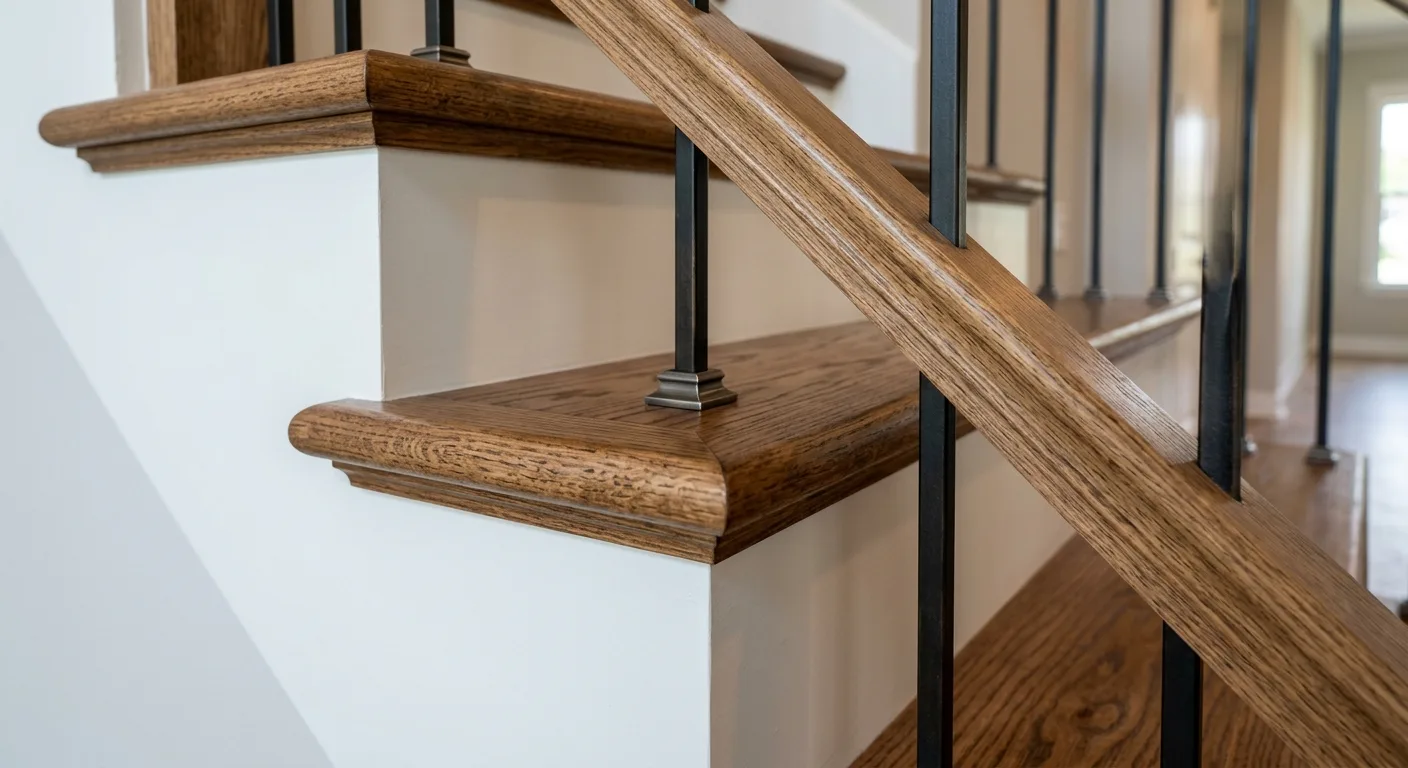
stair installation work, professional service in Jacksonville, FL

What This Service Covers at a Glance

Strictly Builders Inc handles stair work as a complete scope, not a surface-only service.

Structural inspection before any finish work begins
New stair installation on room additions and new builds
Tied to our new builds and addition scope
Multi-stage hardwood sanding with dust containment
Code-compliant riser height and tread depth on all installations
Handrail and baluster repair or replacement included in scope

Stair Work and the Rest of Your Renovation
A staircase rarely exists in isolation. Homes that need new stairs typically need flooring work on the adjoining landing or hallway, and refinished treads often lead to a kitchen or primary bathroom that's due for its own update. We carry the same structural standard from stair work into kitchen remodels, custom borders and inlays, and full interior floor systems -- which means one contractor manages the material transitions, the scheduling, and the finish quality across the entire project. That continuity matters more than most homeowners realize until they've dealt with two separate contractors who hand off a seam that doesn't match. Clients in Ponte Vedra Beach and Atlantic Beach have found this single-scope approach particularly useful when renovating older homes where the staircase, landing, and main floor all need attention at once.
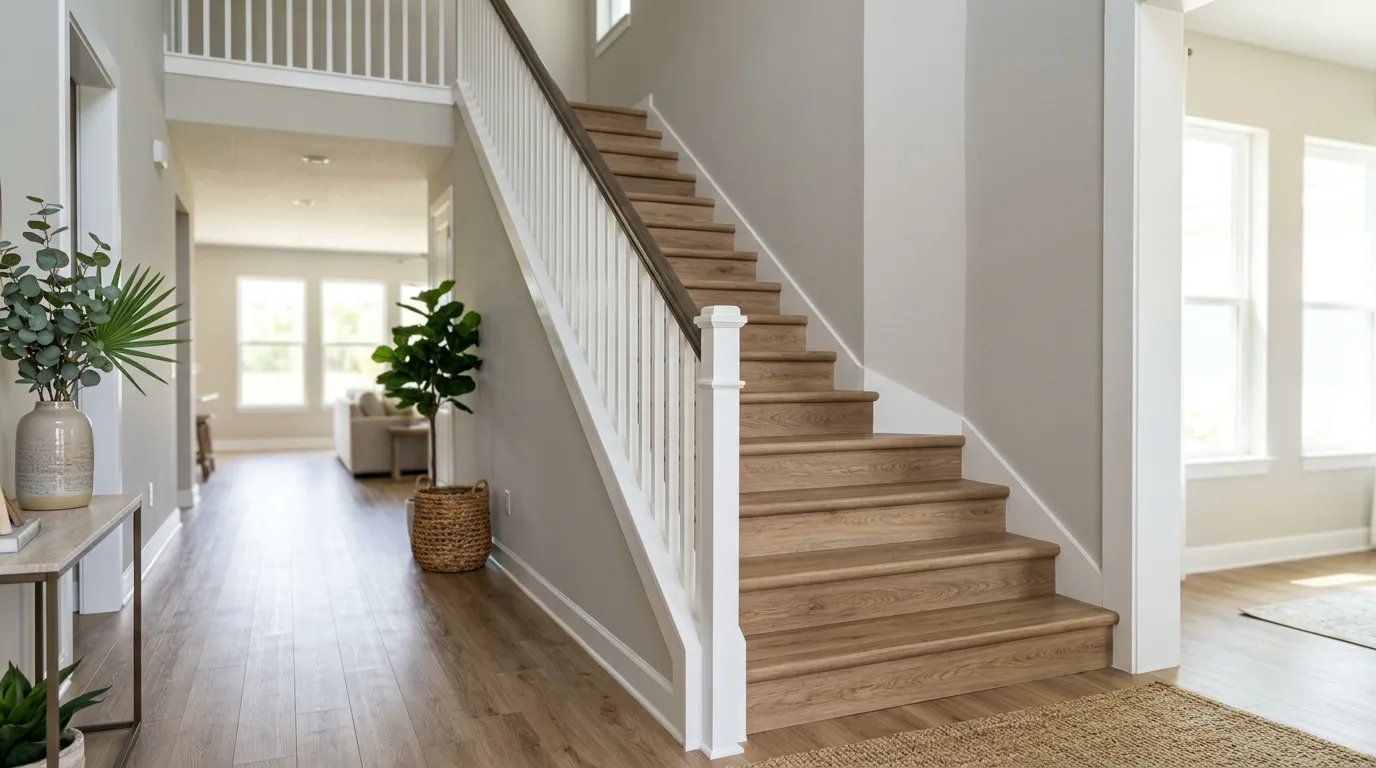
lvp stair nose and treads work, professional service in Jacksonville, FL

Stair Installation and Refinishing: Common Questions

How do I know if my existing stair treads can be refinished or need replacement?
The critical factor is tread thickness above the groove or dado cut. A standard tread starts at roughly three-quarters of an inch of solid wood above that line; once you've sanded through multiple refinishes, that margin shrinks. We measure on-site with a probe gauge. If the wood is thin, cupped, or cracked through the surface, refinishing applies finish over a structural problem -- and that doesn't hold. Replacement is the right call in those cases.
What causes stairs to squeak and can refinishing fix it?
Squeaks come from movement between the tread and the riser, or between the tread and the stringer. That's a mechanical connection problem, not a surface finish problem. Sanding and recoating won't stop the squeak. We secure the connection first -- typically with construction adhesive and fasteners driven from the tread side or, where accessible, from below -- and then proceed with any finish work. Skipping the structural fix is a mistake we don't make.
What wood species holds up best on a staircase with heavy daily traffic?
Harder is better on stairs. Hickory and maple both outperform oak on the Janka hardness scale, which correlates directly to dent and scratch resistance under foot traffic. That said, oak is far more widely available in stair tread profiles and takes stain more evenly. For most residential applications, white oak with a quality oil-modified finish is a practical choice. For very high-traffic homes or rental properties, engineered hardwood treads or LVP stair nose systems are worth considering.
How long does stair refinishing take and when can we use the stairs again?
A standard refinish on a single staircase -- sanding, two to three finish coats with inter-coat dry time -- typically runs two to three days of active work. Water-based finishes allow light foot traffic in 24 hours; oil-modified systems generally need 48 to 72 hours before consistent use. We'll give you a realistic timeline before we start, not an optimistic one. Planning around stair access in a multi-story home is something we address during the scope discussion.
Does new stair installation require a permit in Florida?
In most Florida jurisdictions, a full stair installation that's part of a structural addition or new build falls under the building permit for that larger project. Standalone stair replacement on an existing structure can sometimes be classified as like-for-like repair, but the answer depends on your county's interpretation and the extent of the structural change. We work within the permit requirements applicable to the project scope and don't encourage homeowners to skip the step -- a non-permitted stair can complicate a home sale.
Can you match new treads to existing hardwood floors on the landing?
Species and stain matching is one of the more technically demanding parts of stair work, and the honest answer is that a perfect match is rarely achievable when the existing floor has years of UV exposure and foot-traffic patina. We can get very close with species selection and custom stain blending, and we'll show you a test patch before committing the whole flight. Alternatively, we refinish the adjacent wood floor at the same time, which levels the aging baseline and produces a far more consistent result.
What wood species holds up best on a high-traffic staircase?
Harder is better on stairs. Hickory and maple both outperform oak on the Janka hardness scale, which correlates to dent and scratch resistance under foot traffic. That said, oak is far more widely available in stair tread profiles and takes stain more evenly. For most residential applications, white oak with a quality oil-modified finish is a practical choice. For very high-traffic homes, LVP stair nose systems are also worth considering.
How long does stair refinishing take and when can the stairs be used again?
A standard refinish on a single staircase typically runs two to three days of active work. Water-based finishes allow light foot traffic in 24 hours; oil-modified systems need 48 to 72 hours before consistent use. We'll give you a realistic timeline before we start. Planning around stair access in a multi-story home is something we address during the scope discussion, not after the floor is down.
Does new stair installation in Florida require a permit?
In most Florida jurisdictions, a full stair installation that's part of a structural addition or new build falls under the building permit for that larger project. Standalone stair replacement can sometimes be classified as like-for-like repair, depending on your county's interpretation and the extent of structural change. We work within the permit requirements applicable to the project and don't encourage skipping that step -- a non-permitted stair can complicate a future home sale.
Can new stair treads be matched to existing hardwood floors on the landing?
Species and stain matching is technically demanding, and a perfect match is rarely achievable when the existing floor carries years of UV exposure and patina. We can get very close with species selection and custom stain blending, and we'll show you a test patch before committing the full flight. Alternatively, refinishing the adjacent floor at the same time levels the aging baseline and produces a far more consistent visual result across the landing.

Ready to Fix, Build, or Refinish Your Staircase?

Ryan Alson and the Strictly Builders Inc crew are available seven days a week. Call for a free estimate and we'll tell you exactly what the staircase needs.

Related