
Family-owned · Jacksonville Local
Epoxy Floor Coatings That Hold Up to Real Use
From garage slabs to commercial floors, we coat, seal, and finish concrete the right way.
Free estimate
Tell us what you need
Three fields. It reaches a person here, not a call centre.
Epoxy Floor Coatings Worth the Investment
Epoxy floor coatings fail more often from bad prep than bad product. That's the part most contractors skip or rush, and it's exactly why coatings peel, bubble, and yellow within a year. At Strictly Builders Inc, surface preparation is where the job actually starts. We grind or acid-etch the concrete before a single drop of epoxy goes down, because adhesion is everything. If you're searching for epoxy floor coatings that don't need to be redone in two seasons, call us first.
A proper epoxy coating project involves more than rolling on a floor paint from the hardware store. The process includes moisture testing, surface grinding or etching, primer coat application, broadcast aggregate if specified, and a sealed topcoat rated for foot or vehicle traffic. What drives cost up or down is the square footage, the condition of the existing slab, whether subfloor repair and leveling is needed beforehand, and the finish system you choose. Metallic epoxy systems, chip flake floors, and straight solid-color coatings all sit at different price points. The work we do connects naturally with flooring repairs and patching when the slab has existing cracks or damage that need addressing before coating. Every job is different, contact Strictly Builders Inc for an accurate estimate.
Where Epoxy Coatings Work Best
Not every floor is the same. Here's where epoxy delivers the most value.
Garage Floors
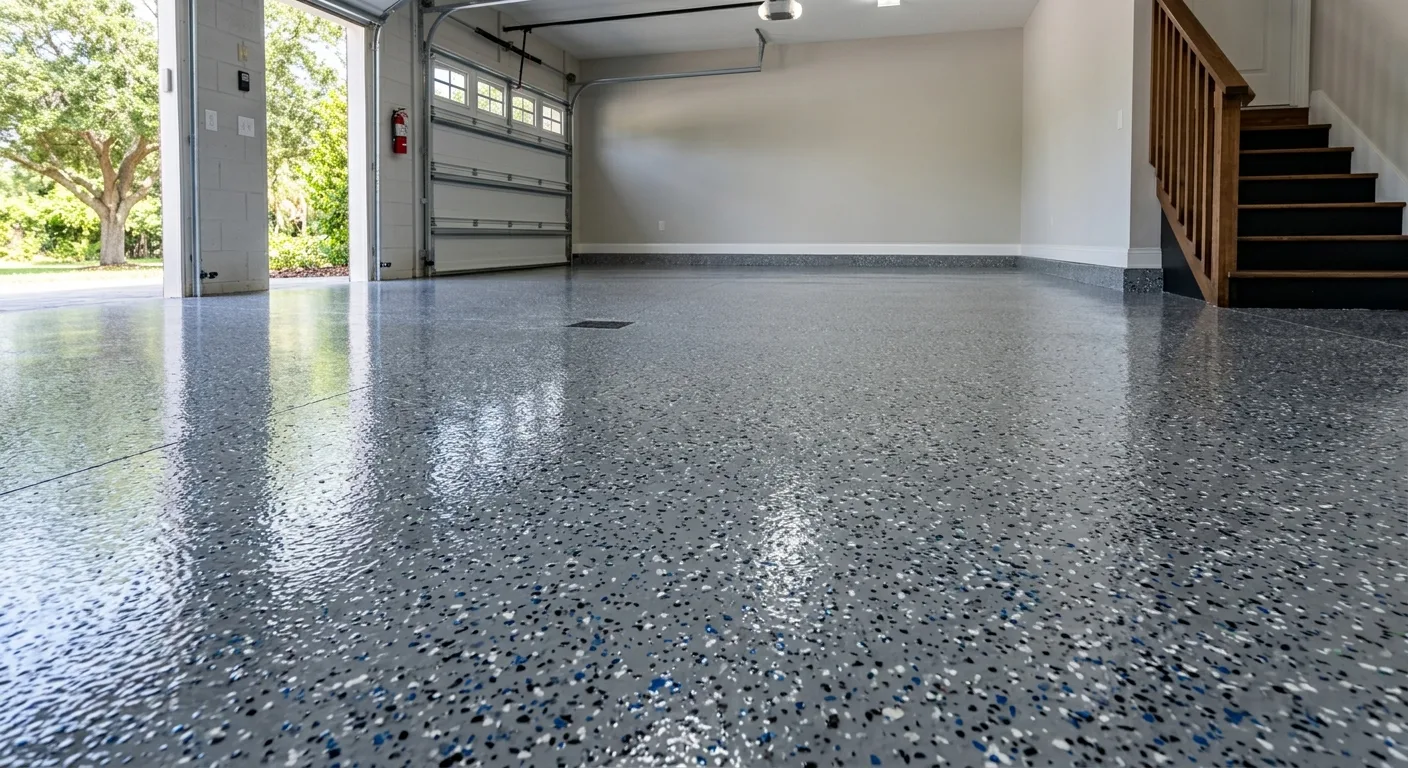
Concrete garages absorb oil, salt, and moisture over time. An epoxy coating seals the slab, makes cleanup simple, and holds up under vehicle weight without cracking or chipping when the prep work is solid.
Basement Floors
Basements in Florida deal with humidity and occasional moisture intrusion. We test for moisture before coating, because epoxy over a wet slab is a short-term fix that fails fast. When the slab is dry and clean, epoxy turns a raw basement into a usable, finished space.
Commercial Slabs
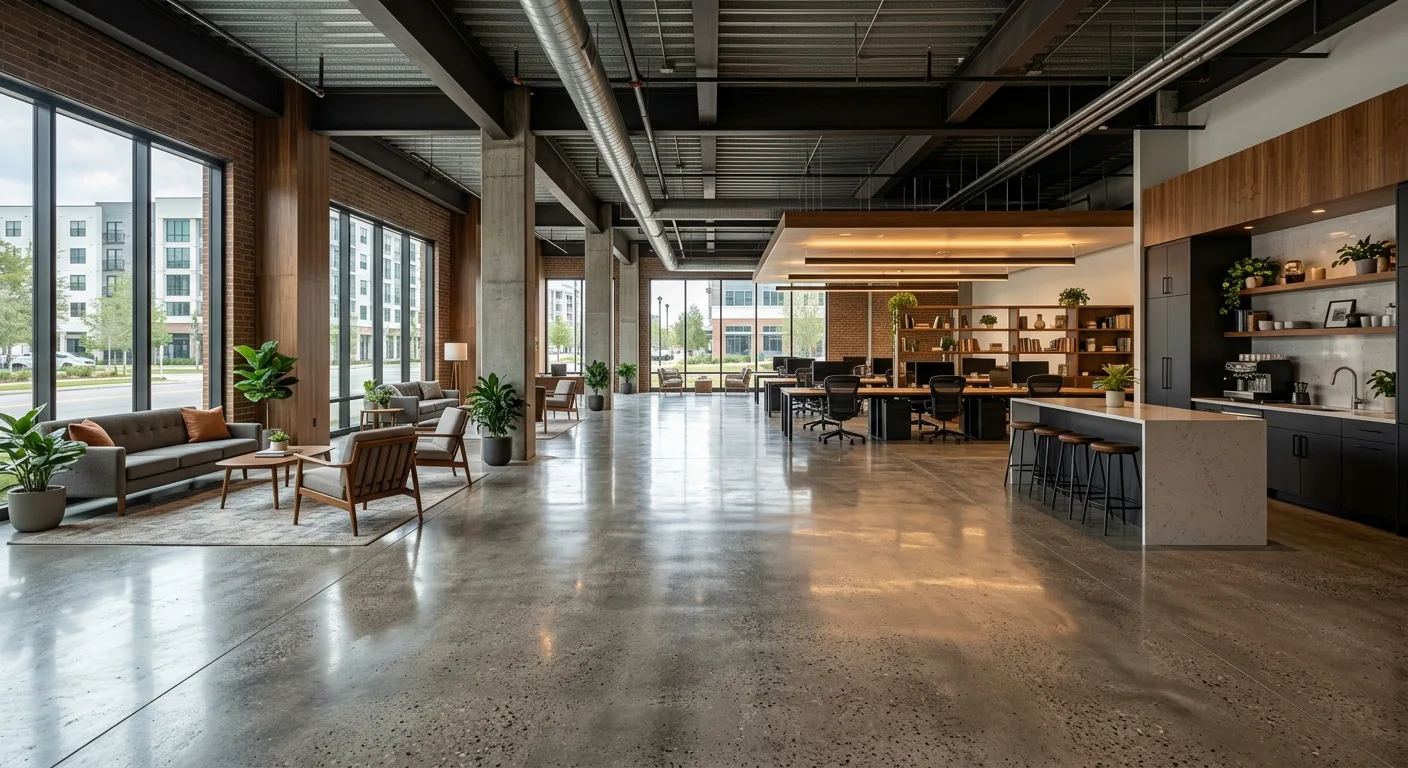
Warehouses, shops, and commercial facilities need floors that can take forklift traffic, dropped tools, and daily wear. We use industrial-grade epoxy systems rated for that load, not residential products stretched beyond their spec.
Laundry and Utility Rooms
Small utility areas benefit from a coated floor that resists chemical spills and wipes clean. These spaces often pair naturally with a broader renovation, and we coordinate the floor coating alongside any interior painting or finishing work happening in the same area.
Patios and Covered Outdoor Slabs
Outdoor concrete takes UV exposure and rain. We use UV-stable topcoat systems for covered patios so the color doesn't chalk or fade within the first year. This isn't a product you'll find at a box store.
Our Process
How We Coat a Concrete Floor
- 01
Surface Preparation
We grind, shot-blast, or acid-etch the concrete to open the surface profile. Existing coatings, oil stains, and high spots get addressed here. This step determines how long the finished coating lasts.
- 02
Crack and Patch Repair
Cracks and spalls get filled with a compatible patching compound before any epoxy goes down. Coating over unrepaired damage just transfers the problem to the surface.
- 03
Coat and Finish
We apply primer, base coat, and topcoat in the correct sequence for the system specified. Chip flake, metallic, or solid color finishes each have a defined process, and we follow it. No shortcuts on drying times.
What to Know
Downsides of Epoxy You Should Understand
Finish Options We Install
- 01
Solid Color Epoxy
Clean, uniform appearance with a satin or gloss finish. Common for garages and commercial floors where function matters more than decorative effect.
- 02
Chip Flake Systems
Vinyl flakes broadcast into a wet base coat, then sealed with a clear topcoat. Hides imperfections well and provides texture that reduces slip risk.
- 03
Metallic Epoxy
Pigmented metallic powders mixed into the base coat create a three-dimensional swirled appearance. Popular for showrooms, retail spaces, and high-end residential installs.
- 04
Polyaspartic Topcoat
A UV-stable, fast-curing topcoat applied over epoxy base. Better than standard epoxy alone for outdoor or high-UV applications. Cures faster, which reduces the time before the floor is back in service.
Work We Handle Alongside Floor Coatings
Subfloor and Slab Repair
Cracks, heaving, or unlevel areas get addressed before coating. We handle subfloor repair and leveling as part of the same project scope.
Bathroom and Utility Tiling
Epoxy coatings work in some wet areas, but others are better served by tile. Our tiling work covers bathrooms, utility rooms, and any space where grout and tile is the right spec.
Full Flooring Installation
Homes and commercial spaces rarely have only one floor type. We install carpet tile, LVP, hardwood, and epoxy under the same project without coordinating multiple contractors.
Schedule Your Epoxy Floor Estimate
Ryan Alson and the Strictly Builders Inc crew are available Monday through Sunday. We assess the slab, confirm the right system for your use case, and give you a straight estimate before work begins.