
Family-owned · Jacksonville Local
Luxury Vinyl Plank Installation: Clean Floors, Solid Install
LVP installation handled from subfloor prep to final trim, by one licensed contractor.
Free estimate
Tell us what you need
Three fields. It reaches a person here, not a call centre.
LVP Installation That Starts at the Subfloor
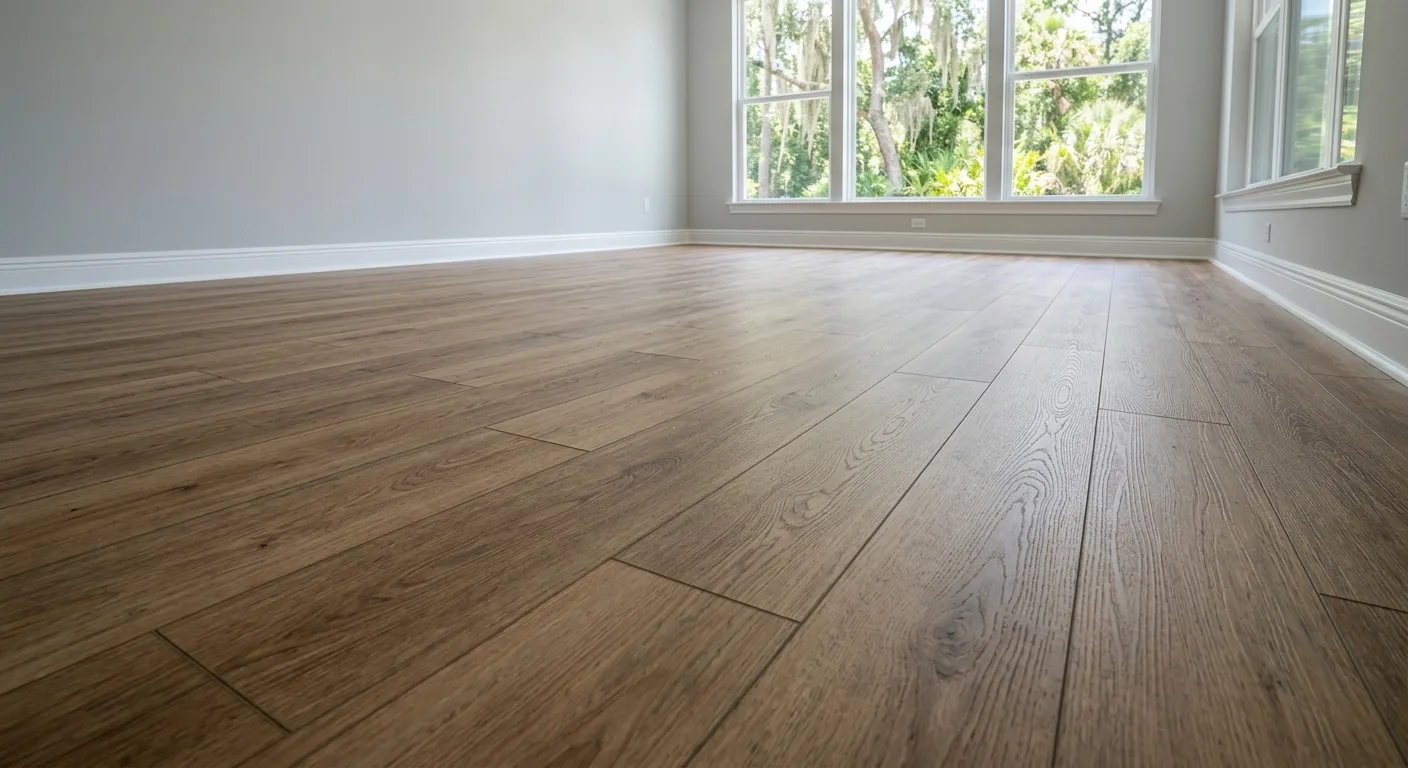
Luxury vinyl plank installation is one of the most cost-effective flooring upgrades available right now, but the result depends almost entirely on what happens before the first plank goes down. If the subfloor isn't flat and dry, even the best LVP will click, buckle, or separate inside a year. Strictly Builders Inc handles the full scope, subfloor assessment and leveling, layout planning, and installation, so you're not calling three different contractors to finish one floor. Ryan Alson has been in the trade for three years, and this is the kind of project where cutting the prep short always shows up later. Call for a free estimate before you buy material.
What drives cost on an LVP job is rarely the planks themselves. It's room size, how many transitions and thresholds you need, whether the existing subfloor requires patching or leveling, and whether demo is part of the scope. A small hallway and a whole-house flooring repair and replacement are completely different projects. LVP itself ranges from budget click-lock to commercial-grade rigid core with attached underlayment, material selection changes both the install method and how the floor performs over time. Every job is different, contact Strictly Builders Inc for an accurate estimate.
What Goes Into a Proper LVP Install
The floor you see is only as good as what's underneath it.
- 01
Subfloor Inspection and Prep
Every install starts with checking the subfloor for moisture, soft spots, and levelness. High spots get ground down. Low spots get filled. If there's damage, it gets addressed before anything goes on top of it.
- 02
Layout and Direction Planning
Plank direction affects how a room reads visually. Running boards parallel to the longest wall is a starting point, but room shape and natural light matter too. This gets planned before the first plank is cut.
- 03
Plank Installation and Fitting
Click-lock LVP installs as a floating floor over underlayment. Glue-down requires a different adhesive process and surface prep. Cuts around doors, vents, and irregular walls are made precisely, no gaps covered with caulk.
- 04
Transitions, Trim, and Finish
T-moldings at doorways, reducer strips at height changes, and quarter-round or base shoe along walls complete the install. These details are where a lot of DIY jobs fall apart. We finish them out clean.
LVP Types
Not All Luxury Vinyl Plank Is the Same
Click-Lock Floating
The most common residential format. Planks lock together and float over the subfloor on underlayment. Works well in most rooms. Doesn't require adhesive, but still needs a level subfloor to avoid flex and noise.
Glue-Down LVP
Used in commercial settings and high-traffic residential areas. Bonded directly to the subfloor, no floating movement. More labor-intensive to install and to remove later, but highly stable under heavy foot traffic.
Rigid Core (SPC/WPC)
Stone polymer or wood polymer core construction. More dimensionally stable than standard LVP in temperature fluctuations, which matters in Florida homes without consistent HVAC. Thicker, heavier, and more forgiving over minor subfloor imperfections.
LVP Over Radiant Heat
Some LVP products are rated for use over in-floor heating systems. Not all are. The wrong product over radiant heat will expand, buckle, or void the flooring warranty. Confirm compatibility before selecting material.
Common Issues
Mistakes That Cause LVP Floors to Fail
Most flooring callbacks trace back to one of these.
- 01
Skipping Subfloor Leveling
LVP tolerates minor variation, but most manufacturers specify no more than 3/16 inch over 10 feet. Beyond that, planks flex underfoot, locking joints stress, and the floor starts clicking or separating. Leveling isn't optional.
- 02
No Acclimation Period
LVP expands and contracts with temperature. Most manufacturers require 24 to 48 hours of acclimation in the installation space before install. Skipping this step in a Florida climate causes gapping in cooler months and buckling when temps rise.
- 03
Forgetting Expansion Gaps
LVP needs room to move. Planks installed tight to walls or under door jambs with no gap will buckle as the material expands. Gaps get covered by baseboard and trim. You don't see them, but they have to be there.
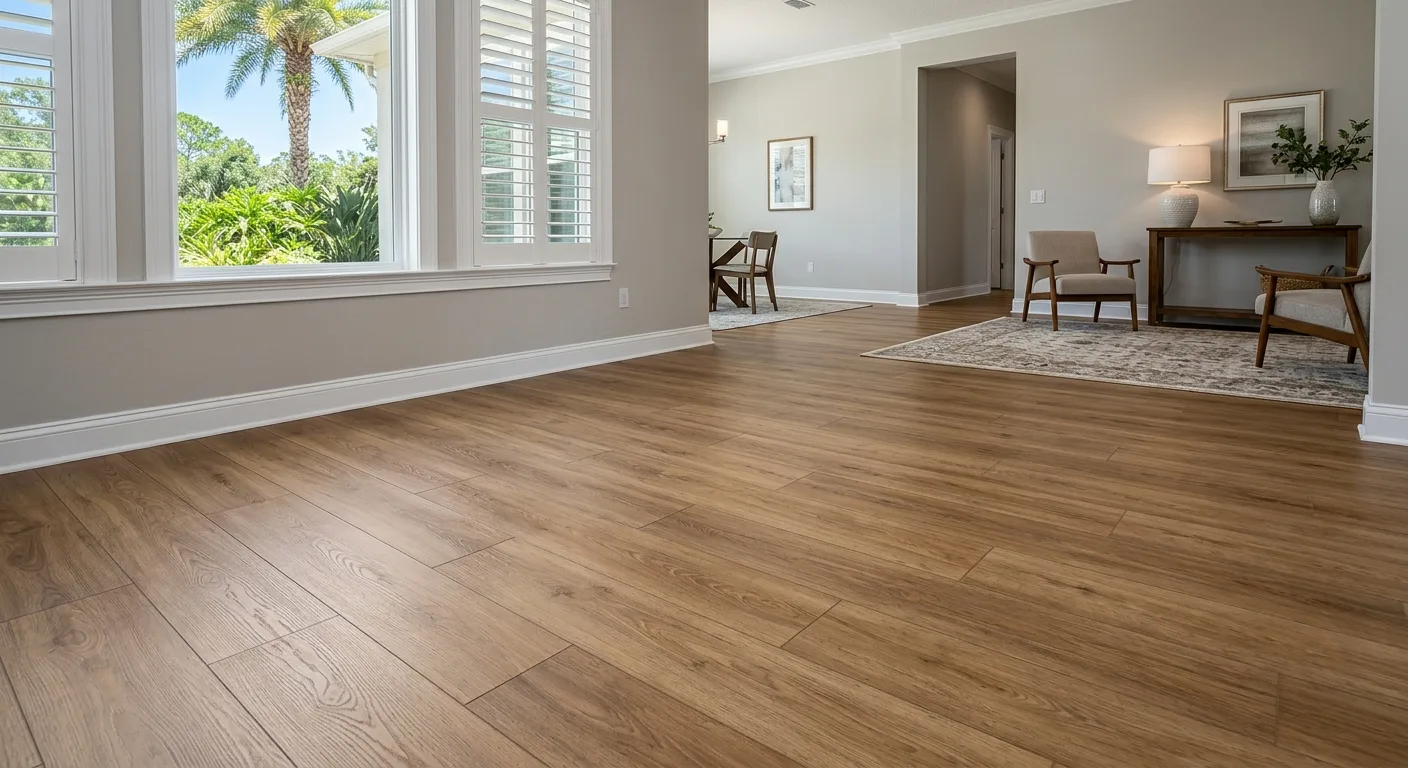
LVP Works Well Alongside Other Work
What to Know Before Calling for an Estimate
Bring these details and the estimate goes faster.
- Square footage of the space
- Measure length times width for each room, add 10% for cuts and waste
- Existing floor condition
- Is the current floor being removed, or is LVP going over it?
- Subfloor material
- Concrete slab or wood subfloor changes the install method
- Product already selected or still deciding
- We can advise on thickness and core type for your specific situation
Ready to Replace Your Floors?
One contractor, full scope, no runaround.